The most important specifications to confirm before project day include panel gauge (24 vs. 26), panel width, seam height, panel length, finish system, and attachment method. Confirming these details before fabrication helps prevent installation delays, material waste, and long-term performance issues. At Standing Seam Board & Batten of Oklahoma, working with a reliable standing seam metal roofing supplier before production begins is how architects avoid installation delays, material waste, and long-term performance failures.
What Gauge Should Architects Specify?
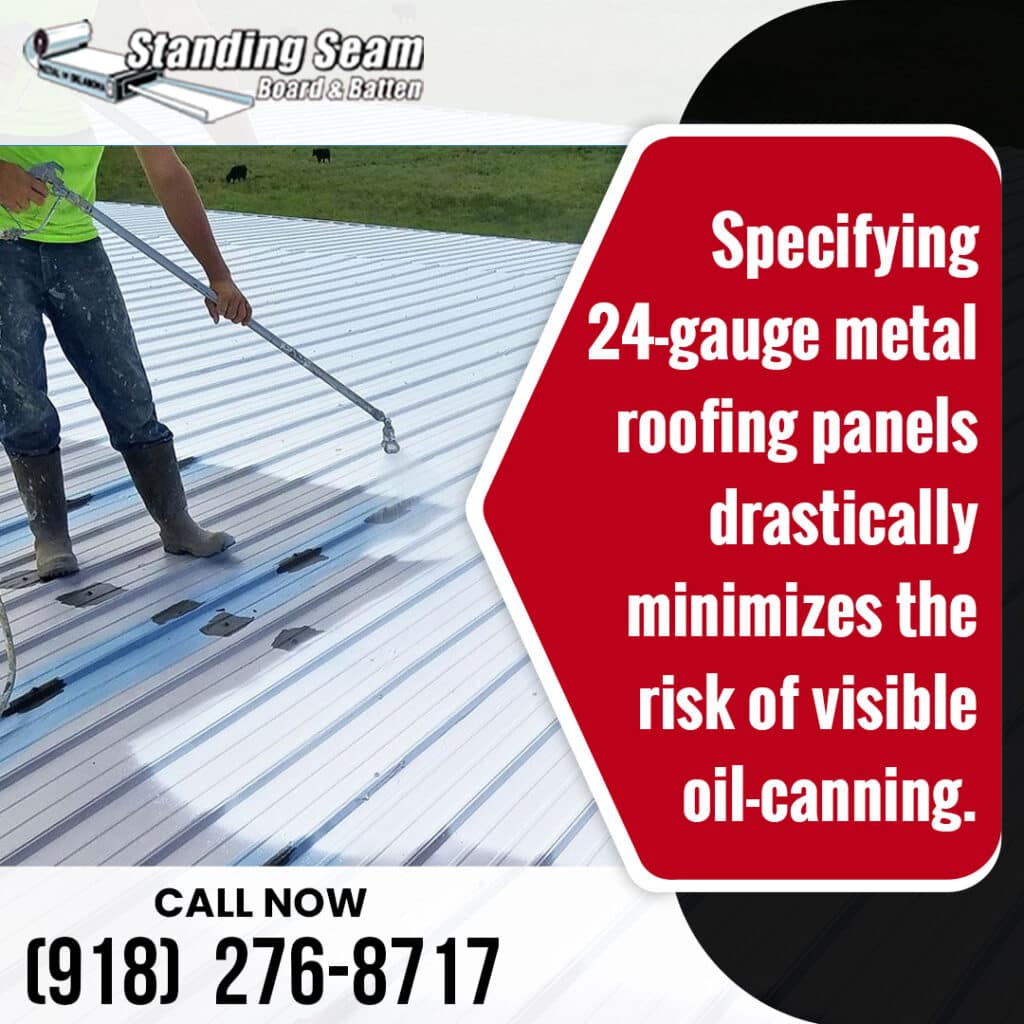
Gauge determines panel stiffness, uplift resistance, and oil-canning behavior. 24 gauge offers significantly better resistance to oil canning on wide panels and long runs. In comparison, 26-gauge is the most common default for residential standing seam work, offering a good balance of panel stiffness and material cost.
In many Oklahoma projects exposed to high wind loads, architects often specify 24-gauge panels because the additional stiffness may improve system performance. However, overall wind resistance depends on the complete tested roof assembly, including clips, fasteners, substrate, and manufacturer-approved installation methods. Reserve 26-gauge for shorter spans where structural loads are minimal.
| Gauge | Best Application | Key Advantage |
| 24 | Residential, commercial, wide panels | Better rigidity, less oil canning |
| 26 | Standard residential, shorter spans | Cost-effective, widely available |
What Panel Width and Seam Height Work Best?
Most standing seam panels offer an effective coverage width of 16 to 18 inches, with panels wider than 18 inches far more likely to show oil canning. Narrower panel widths generally provide greater stiffness regardless of gauge. When wider panels are specified, architects often select thicker 24-gauge steel to improve rigidity and help reduce visible waviness.
Seam height selection depends on system type and roof slope. A snap-lock profile suits standard residential pitches, while mechanically seamed panels handle low-slope applications where a tighter, continuous lock along the full seam length is needed for water performance.
Key Spec Decisions Before Ordering
- Panel width relative to gauge selected
- Seam height relative to roof pitch and water shedding requirements
- Profile type: snap-lock for standard residential slopes, mechanically seamed for low-slope applications
- Striation preference to reduce visible waviness on flat panel sections
Why Does On-Site Custom Panel Production Matter?
Standard-length panels shipped from distant facilities create two problems: shipping damage and required field cuts. Every field cut at the ridge or eave introduces a new seam point outside the original spec, and each one is a potential weak spot over time.
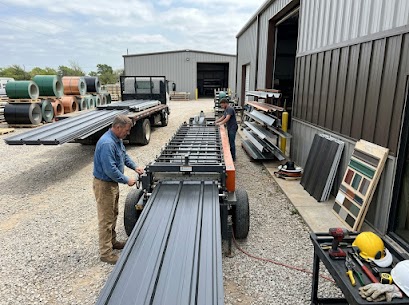
We bring production to the job site, forming each panel to the exact length your plans require. This eliminates field trimming entirely and keeps the structural standing seam metal roofing performing as designed from day one. For architects sourcing metal roofing in Tulsa, OK, and across the four-state area, on-site production also removes the risk of material inconsistencies that arrive with pre-cut shipped orders.
How Does the 40-Year Paint Warranty Factor Into the Spec?
Our panels carry a 40-year manufacturer’s warranty on the paint system. When architects remain accountable for material recommendations long after project closeout, specifying a warranted finish adds a layer of protection to the original design decision. Confirm the finish warranty in writing as part of the product selection process, not as an afterthought.
Frequently Asked Questions
How early should architects coordinate panel orders for custom lengths?
Custom fabrication requires scheduling that off-the-shelf orders do not. Coordinate with your supplier well ahead of the installation phase so panels are ready when other trades clear the way.
Does finish color affect thermal performance in Oklahoma?
Yes, it does. The finish on a metal roof plays a direct role in how much solar heat the building absorbs during Oklahoma summers. The U.S. Department of Energy identifies high solar reflectance and high emittance as the two key properties that reduce building cooling loads in a roofing material.
What gauge is appropriate for structural standing seam metal roofing on commercial spans?
Commercial applications call for 24-gauge or heavier. Greater load and wind uplift demands on commercial spans require the additional stiffness that heavier gauge steel provides over standard residential specifications.
Ready to Spec Your Next Metal Roof? Talk to Us First.
Standing Seam Board & Batten of Oklahoma works directly with architects, builders, and contractors across Tulsa, Grove, Miami, Joplin, Bentonville, and nearby areas. We offer panels in 24- and 26-gauge, custom lengths cut on-site, and a 40-year paint warranty.
Call us at (918) 276-8717 or email [email protected] to confirm your specs before project day.