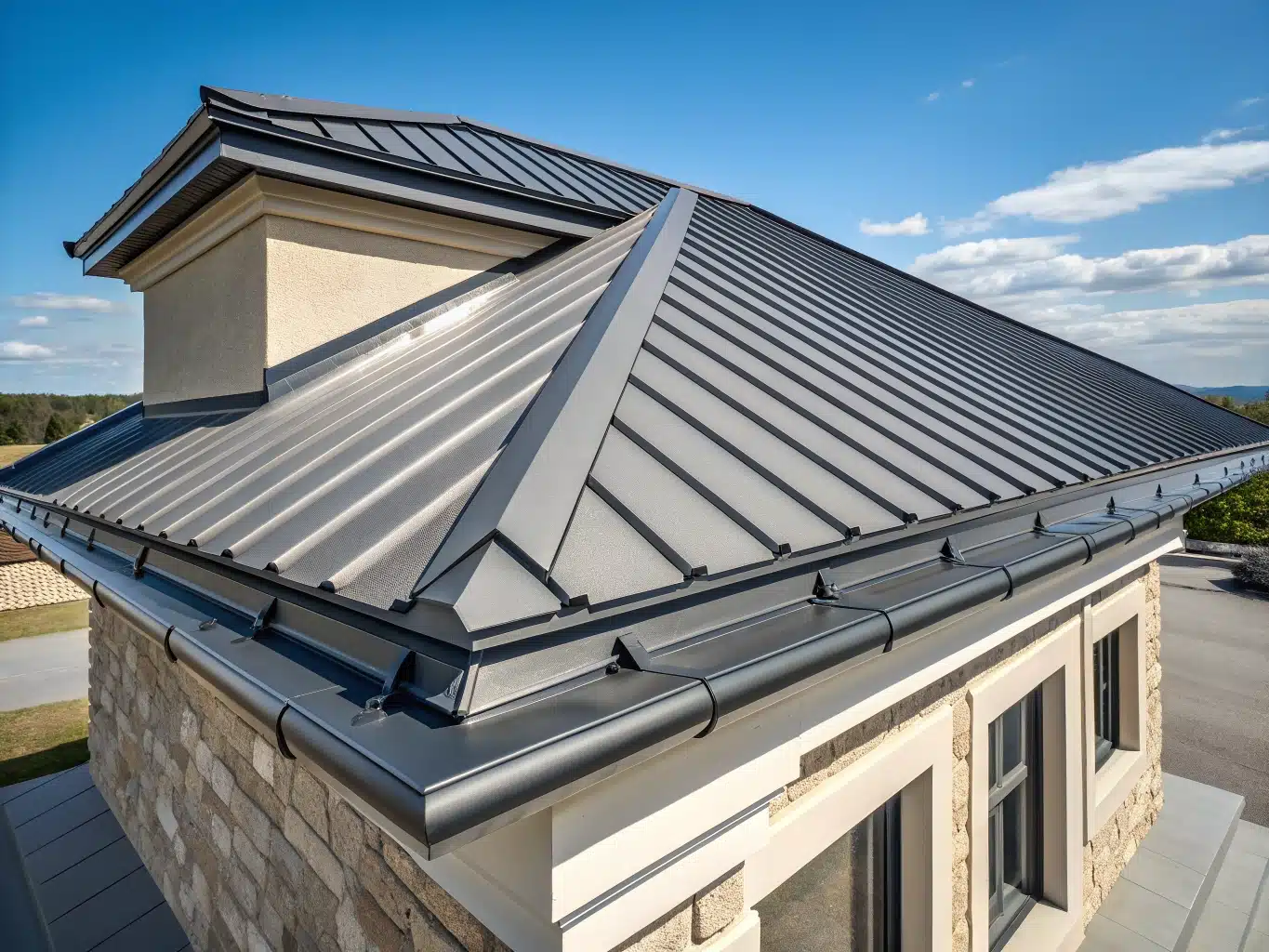
The clearest signs that roof trim needs replacing are rust streaks, visible gaps at seams, loose fasteners, and warping along ridges or edges. Standing Seam Board & Batten of Oklahoma flags these spots first on every inspection. Homeowners often assume a clean-looking roof is fine, but catching these early signs prevents a much larger repair down the road.
How Do I Spot Early Warning Signs of Failing Trim?
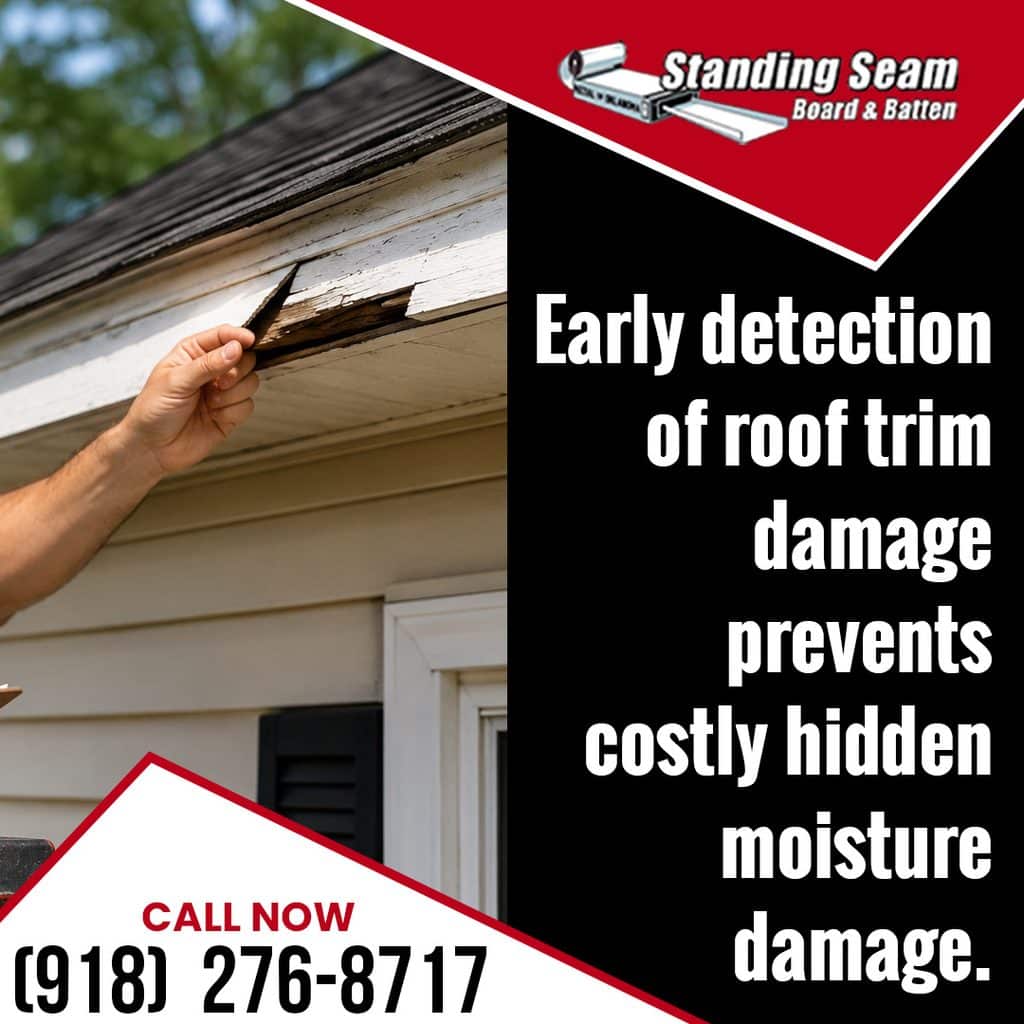
The earliest signs of failing trim are visual: rust streaks running down a panel, small gaps where trim meets the roof surface, and fasteners that have backed out or loosened. As a standing seam metal roofing supplier, we walk this same checklist on every site visit, and none of these signs require climbing onto the roof to spot from the ground with binoculars or from a ladder at a safe height.
Why Am I Seeing Rust or Discoloration on My Trim?
According to the International Association of Certified Home Inspectors, rust stains can appear on roof components even when the surrounding material looks intact. Inspecting nearby metal parts for rust damage is a standard step whenever discoloration is spotted. On a standing seam roof, this usually shows up first at ridge caps and valley trim, the areas exposed to the most standing water and temperature swings.
How Do I Tell If My Trim Damage Is Cosmetic or Serious?
Not every mark on the trim means it needs replacing. The difference comes down to whether the damage is surface-level or has compromised the metal’s ability to seal.
| Sign | Cosmetic Wear | Needs Replacement |
| Discoloration | Light fading, uniform color loss | Rust streaks, orange or brown flaking |
| Fasteners | Slightly loose, easy to retighten | Backed out, stripped, or missing |
| Seams | Tight, no visible daylight | Gaps you can see light through |
| Shape | Flat, follows the roofline | Wavy, lifted, or pulling away |
| Sound | Silent in wind | Rattling or ticking during wind |
When Should I Replace My Trim Right Away?
Trim should be replaced immediately if any of the following are present, since these point to active water intrusion rather than early wear:
- Visible daylight or gaps at ridge caps, valleys, or wall flashing
- Rust streaks running down panels below a trim piece
- Fasteners that are missing, stripped, or backed out at multiple points
- Trim that has visibly warped, lifted, or separated from the panel
- Water stains on the ceiling or in the attic below a trim line
- A rattling or ticking sound from the roof during windy weather
On a structural standing seam metal roofing system, waiting on any of these rarely saves money. Water that gets behind trim travels along the underlayment before it ever shows up as an interior stain, so the damage is often larger than it looks from the outside.
Should I Repair or Fully Replace My Trim?
Whether to repair or replace depends on how many trim pieces are affected and whether the underlying panel gauge and profile still match what’s available. A single loose ridge cap on an otherwise sound roof is a repair. Rust or gaps across multiple trim runs, or trim that no longer matches the panel’s custom metal trim solutions profile, usually calls for full replacement so the new pieces seat correctly.
Homeowners looking for metal roofing in Tulsa, OK, should ask any contractor whether replacement trim will be custom-matched to the existing panel run or pulled from generic stock sizes, since a mismatched replacement often fails again within a few seasons.
Frequently Asked Questions
How often should I inspect the trim on my standing seam roof?
Twice a year is standard, once in spring and once in fall, with an additional check after any severe storm or hail event.
Does my trim wear at the same rate on every side of the roof?
No. South- and west-facing trim typically shows wear initially due to greater sun exposure, while north-facing valleys and shaded areas tend to hold moisture longer.
Will replacing just my trim affect my roof’s appearance?
Not if the replacement trim is color-matched and profile-matched to your existing panels. Mismatched trim is usually more noticeable than the wear it replaced.
Noticing These Signs? Here’s What to Do
Standing Seam Board & Batten of Oklahoma inspects and replaces trim with pieces custom-fabricated to match existing panels, so the fix lasts as long as the roof around it. Contact our team at (918) 276-8717 or email [email protected] to schedule an inspection.