
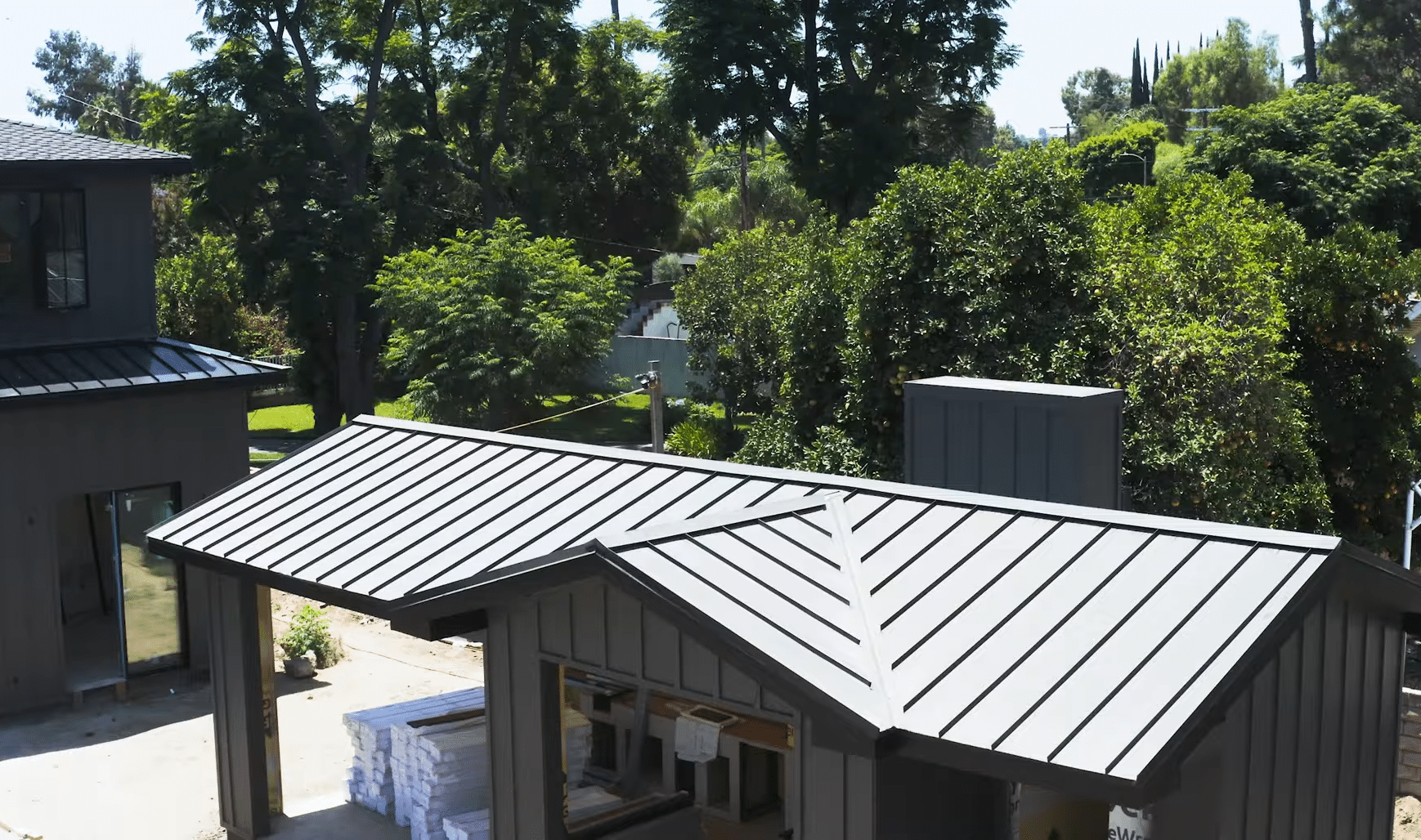
Standing Seam Board & Batten of Oklahoma explains that standing seam roofing uses concealed clips and mechanically seamed edges for superior weather protection. At the same time, standard exposed-fastener panels rely on screws that create ongoing points of wear. As a standing seam metal roofing supplier, we recommend standing seam for most projects where long-term performance matters.
What Is the Difference Between Standing Seam and Exposed-Fastener Panels?
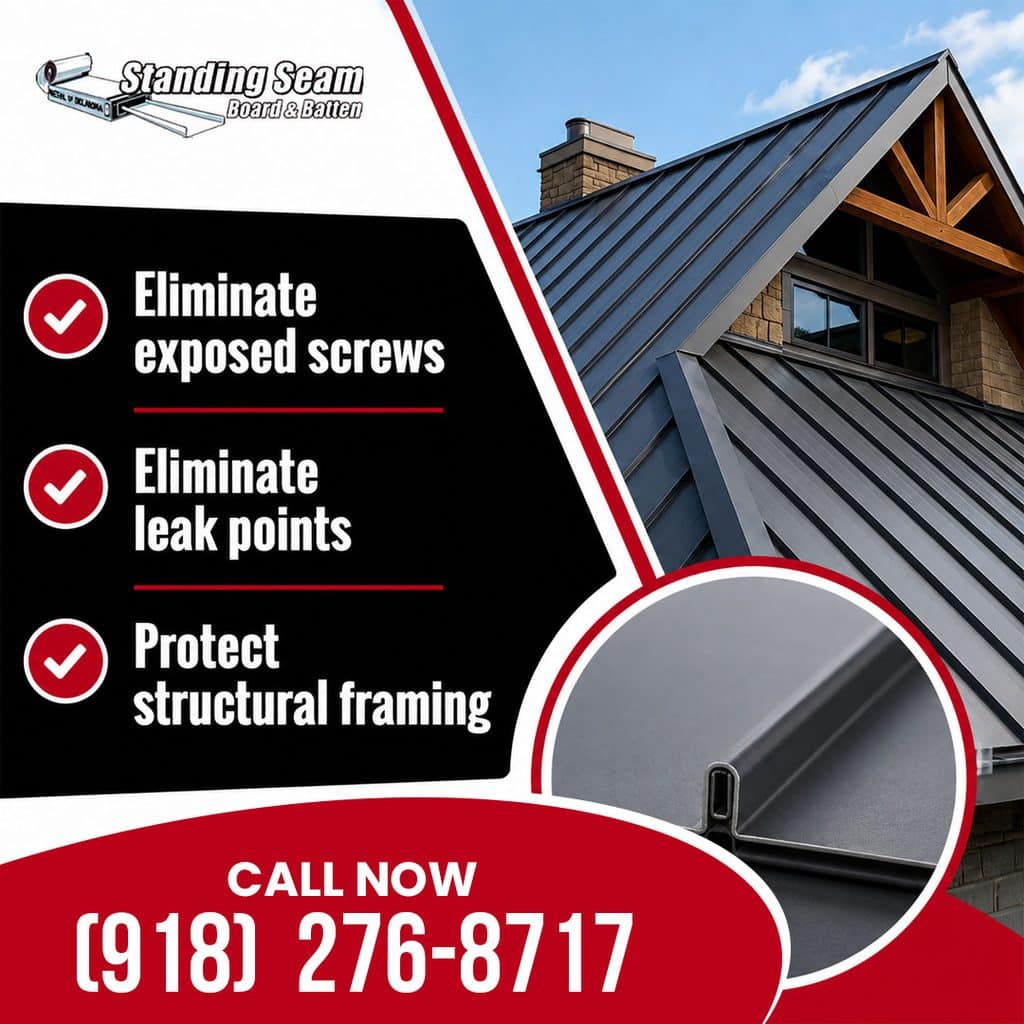
The main difference is how each panel attaches to the roof, and that difference has a real impact on performance. Standing seam panels lock together with concealed clips and a mechanically seamed edge, so no screws penetrate the panel face at all.
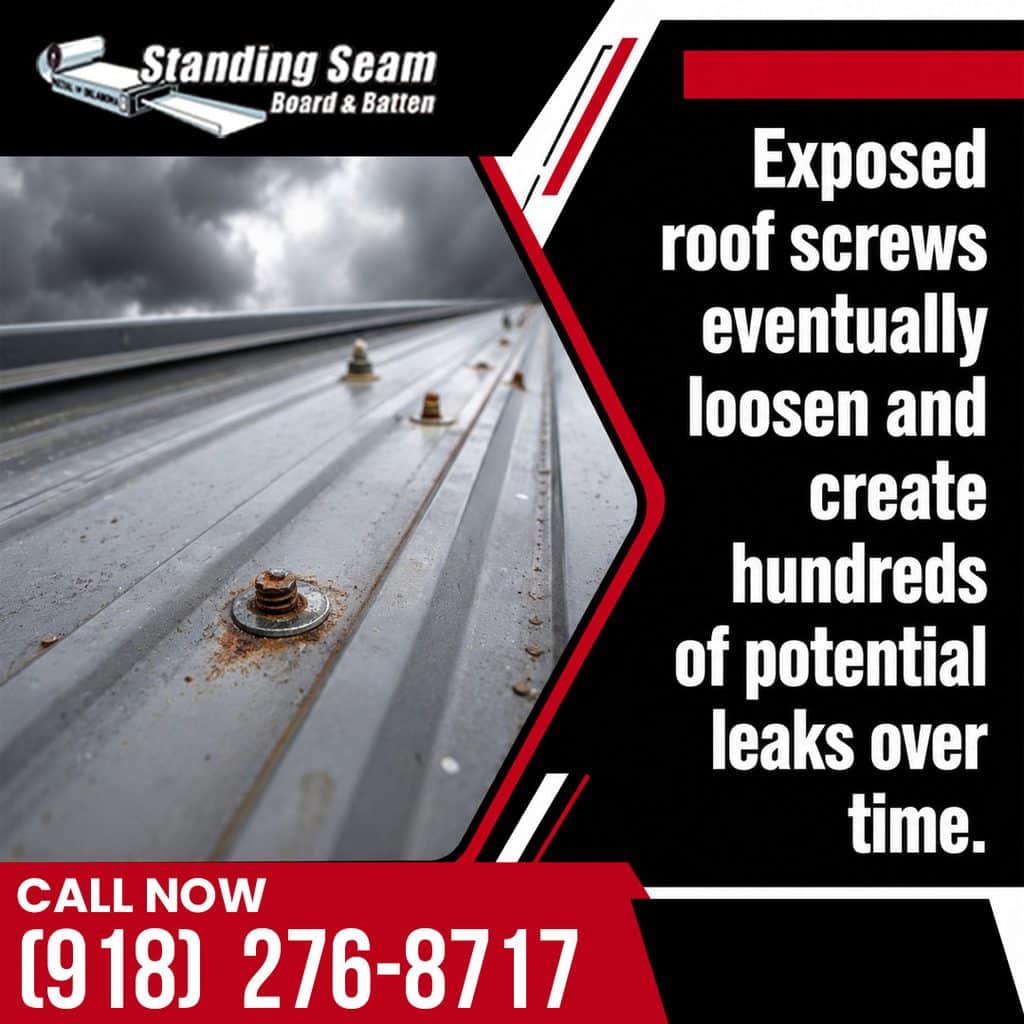
Exposed-fastener panels, like the ribbed panels common on barns and pole buildings, rely on screws driven directly through the metal, and every one of those screw holes is a potential future leak point once the washers age or the screws back out.
At Standing Seam Board & Batten of Oklahoma, we point most clients toward standing seam once they understand this difference, because the upfront cost difference is small compared to the maintenance it avoids.
Fewer Points of Failure Over Time
A standing seam roof has no exposed penetrations for water to find. An exposed-fastener roof can have hundreds of screws across a single roof, and each one needs to hold its seal for the life of the roof, which asphalt and rubber washers were never designed to do indefinitely.
Why Structural Standing Seam Beats Exposed-Fastener Panels
Structural standing seam metal roofing gives open-framed buildings the same span capability that exposed-fastener panels have long provided, but without the long-term weak point of exposed screws.
A technical guide from MBCI notes that open framing substrates, such as minimum 16-gauge purlins or bar joists, should only be paired with structural-style panels engineered to carry their own weight across the open span. Structural standing seam metal roofing meets that requirement while sealing the surface completely.
This mostly comes up on barns, shops, and commercial buildings that used to default to exposed-fastener panels. Some homeowners building on open framing or additions without a solid deck run into the same decision, and they benefit from the same concealed-fastener advantage.
Why Does the Choice Matter for Metal Roofing in Tulsa, OK Projects?
Property owners looking into metal roofing in Tulsa, OK deal with real wind, hail, and temperature swings every year, and that’s exactly where standing seam earns its higher upfront cost back. Exposed-fastener panels can perform fine for a while. Still, the concealed clip system in standing seam holds up better against repeated wind uplift and lasts longer before any maintenance is needed.
| Factor | Standing Seam | Exposed-Fastener Panels |
| Fasteners | Concealed, no surface penetration | Visible screws, hundreds per roof |
| Long-term durability | Higher, fewer failure points | Lower, seals wear over time |
| Wind performance | Stronger clip-based uplift resistance | More vulnerable at fastener points |
| Maintenance | Minimal | Periodic screw and washer checks |
| Common use | Homes, commercial, and open framing (structural) | Barns, ag buildings, shops |
Why Standing Seam Is Usually the Better Long-Term Choice
A few reasons structural standing seam metal roofing tends to outperform exposed-fastener panels over time, especially in Tulsa, OK, where wind and hail exposure matter:
- No exposed screws means no recurring point of leak risk
- Concealed clips allow the panel to expand and contract without stressing the seams
- Structural standing seam metal roofing now covers the same open-framing use cases exposed-fastener panels were once the default for
- Lower long-term maintenance costs offset the higher upfront price
We walk property owners through this comparison directly so the upfront cost makes sense next to the maintenance it prevents.
Frequently Asked Questions
Is standing seam worth the extra cost compared to exposed-fastener panels?
For most homes and commercial buildings, yes, since the reduced maintenance and longer service life typically outweigh the higher installation cost.
Can exposed-fastener panels still be a reasonable choice?
They can work for lower-budget agricultural buildings where appearance and long-term maintenance are less of a priority.
Can I mix panel types on one property?
Yes, though once owners see the performance difference, many choose standing seam for both the house and any open-framed structures on the property.
Talk to a Local Roofing Supplier
Ready to see why standing seam outperforms exposed-fastener panels for your project? Standing Seam Board & Batten of Oklahoma can walk you through the comparison for your home, shop, or commercial build. Call (918) 276-8717 or email [email protected] to get started.