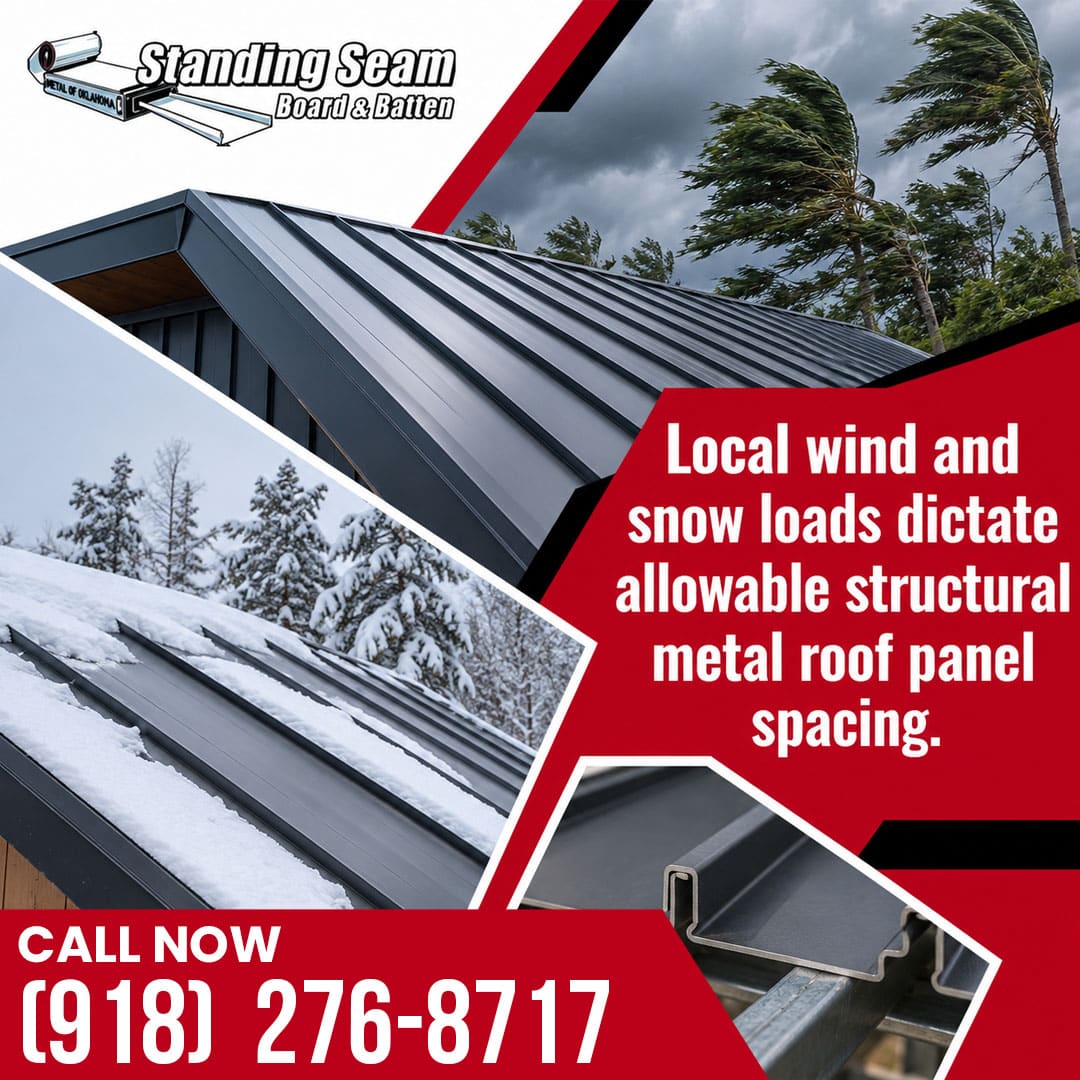
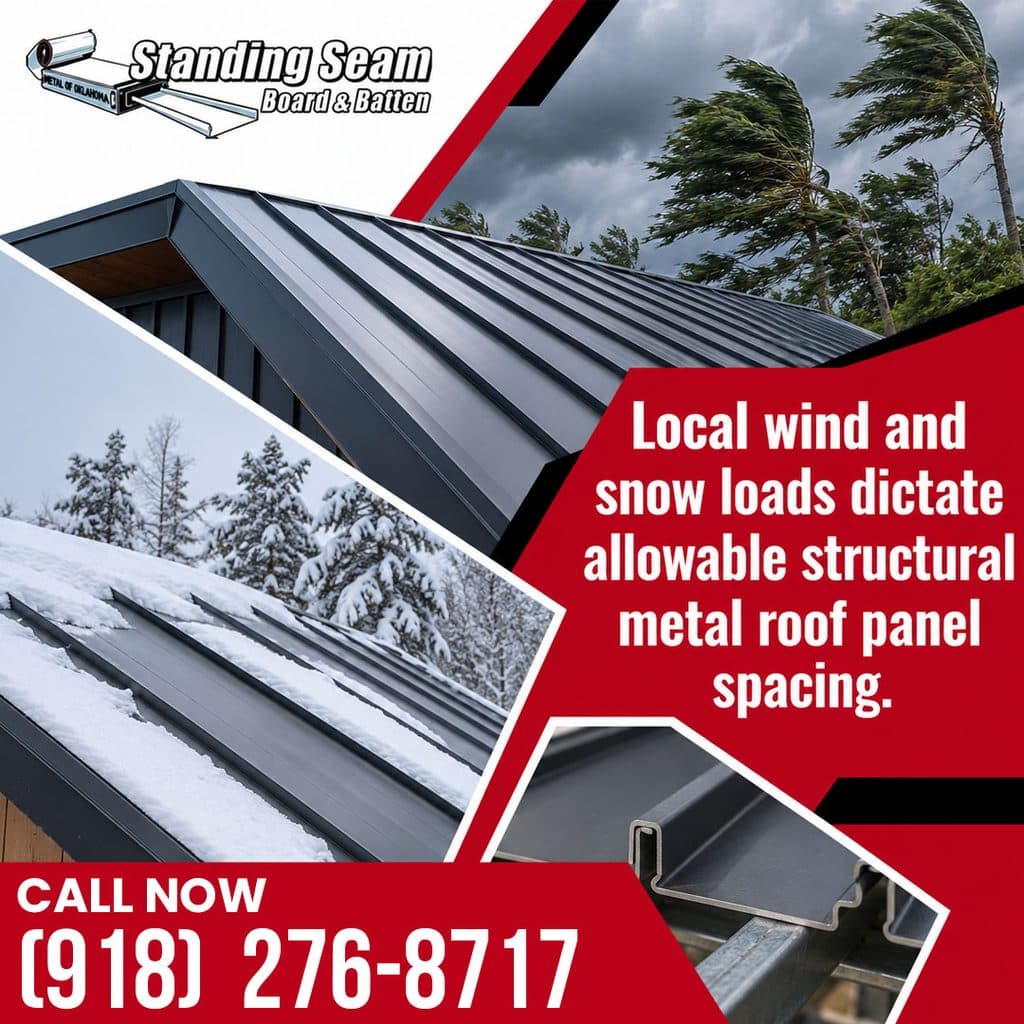
No single number applies to every roof. How far structural standing seam metal roofing can span between purlins depends on the manufacturer’s tested load tables, the panel’s gauge and seam height, and the wind and snow loads set for your site. Standing Seam Board & Batten of Oklahoma supplies panels to fit the spacing your engineer approves.
What Determines How Far a Standing Seam Panel Can Span?
Span depends on the whole roof system, not the panel alone. Structural standing seam metal roofing carries loads between supports much like a beam, so each part of the assembly affects the allowable distance:
- Steel gauge: A lower gauge number means heavier steel, which carries more load between supports.
- Seam height: Taller seams make the panel stiffer over the span.
- Panel profile and width: The shape of the panel and seam changes how the panel flexes under load.
- Clip type and spacing: Clips connect each panel to the purlins, and their spacing affects how the roof handles uplift.
- Purlin size and alignment: Supports need enough capacity for the load and must sit in a straight, even plane.
Change any one of these and the span changes too.
How Do Wind and Snow Loads Affect Span in Tulsa?
Higher design loads mean shorter allowable spans. Wind creates uplift that pulls panels away from the purlins, while snow presses down on the panels. The heavier either load, the closer the supports need to be.
| Load Type | How It Acts on Panels | Effect on Span |
| Wind uplift | Pulls panels up and away from purlins | Higher uplift calls for closer supports |
| Snow load | Presses down on the panel pan | Heavier snow calls for closer supports |
For metal roofing in Tulsa, OK, design wind and snow loads come from the building code adopted for your site, and an engineer or building official applies them to your project. A spacing that works on a sheltered shop may not work on an open hilltop or a taller commercial building.
Where Do Reliable Span Numbers Come From?
Reliable span numbers come from the panel manufacturer’s tested load tables. These tables show how far a specific panel can span under a given load. According to NRCA’s Professional Roofing, the International Building Code requires metal panel roofs to pass wind uplift testing. Manufacturers use those test results to build the load tables that set safe support spacing.
Before framing goes up, ask your standing seam metal roofing supplier for the load table that matches your exact panel and gauge.
What Span Details Should You Confirm Before Ordering?
Confirm that your purlin spacing, panel specification, and load table all match before panels are formed. Panels cut to exact lengths leave little room for spec changes later. Share your framing plan and approved spacing with your standing seam metal roofing supplier so the gauge and profile line up with what your engineer signed off on.
Standing Seam Board & Batten of Oklahoma offers 24- and 26-gauge standing seam panels for projects needing metal roofing in Tulsa, OK. If your approved spacing changes during design, let us know before production so your panel order reflects the final framing plan.
Frequently Asked Questions
Can structural standing seam go over wood purlins?
Many systems allow wood or steel framing. The manufacturer specifies the member type, size, and fasteners for each clip, so follow the installation guide for your panel.
Can solar panels mount on structural standing seam?
In many cases, yes. Seam clamps attach to the raised seams without piercing the panel. Confirm the clamp fits your seam profile and that the added load is part of the roof design.
Will condensation form under panels on open framing?
It can. Warm, moist air meeting cold metal forms droplets under the panels. Insulation with a vapor retarder or good ventilation helps control it.
Talk Span Before You Frame
Standing Seam Board & Batten of Oklahoma helps you choose the panel gauge that fits your project. Have your framing plan handy and reach our team at (918) 276-8717, or email [email protected].