
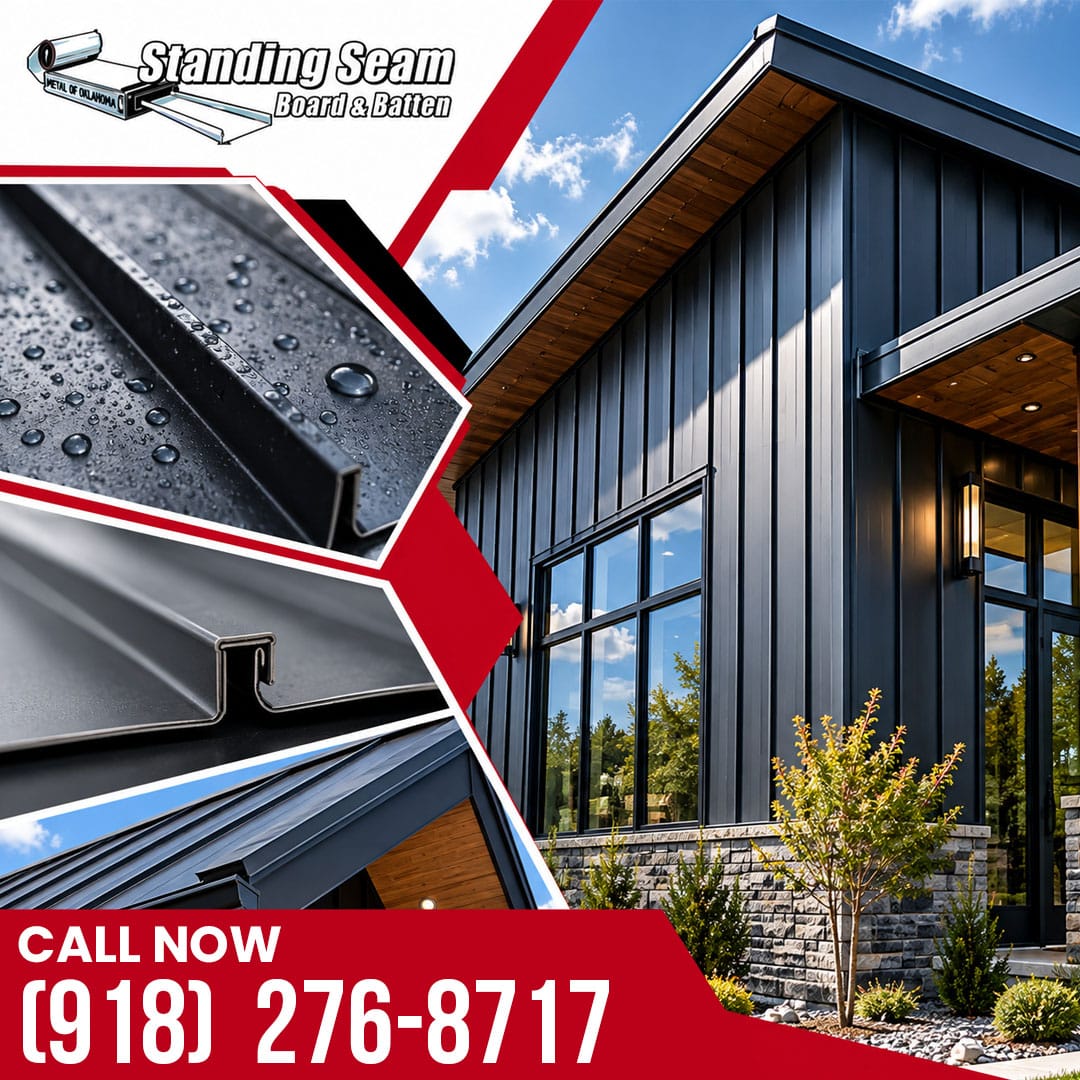
Proper metal siding panel fabrication reduces waste by matching panel dimensions to a building’s measurements before production. At Standing Seam Board & Batten of Oklahoma, we offer custom panel production to help customers order materials suited to their project. Accurate specifications can reduce unnecessary cutting, leftover material, and avoidable replacement orders.
How Does Custom Fabrication Reduce Metal Siding Waste?
Custom fabrication limits waste by producing panels to the lengths needed for specific wall sections. When dimensions are planned, installers may spend less time trimming oversized panels, and fewer unusable offcuts may remain after installation.
Our metal board and batten siding combines a vertical design with metal construction suited to residential and commercial projects. Before placing an order, customers should confirm wall heights, widths, openings, and other architectural details with their chosen installer. These measurements help establish the panel lengths needed for the project.
We also offer on-site panel production, allowing panels to be made at a home or job site in the required lengths. This option can reduce the need to cut long panels on-site, depending on the building layout and installation requirements.
What Should Be Planned Before Ordering Siding Panels?
Material planning involves more than calculating the total square footage of a building. Panel orientation, wall dimensions, openings, corners, and trim details all affect the quantity and configuration of materials needed.
Our board and batten metal siding panels can be custom-ordered to suit project requirements. To prepare an accurate order, customers and their installers should:
- Confirm wall measurements: Record dimensions for each wall separately instead of relying only on the building’s total exterior area.
- Map openings: Account for windows, doors, and other interruptions in the siding layout.
- Review trim requirements: Identify the corners, edges, and transitions that require compatible trim pieces.
- Confirm panel specifications: Select the appropriate profile, gauge, finish, and dimensions before production.
- Check the final order: Compare the proposed quantities with the installation plan before approving fabrication.
These steps help reduce measurement errors and material shortages. They also give the supplier and installer an opportunity to resolve questions before panels are produced.
How Can Better Fabrication Control Project Costs?
Waste reduction can affect several parts of a siding budget. Material offcuts are one consideration, but labor, replacement orders, transportation, and project delays can also influence the final cost.
| Cost factor | How fabrication planning may help |
| Material use | Reduces avoidable cuts from oversized panels |
| Labor | Limits some on-site measuring and trimming |
| Replacement orders | Helps prevent errors caused by incorrect dimensions |
| Scheduling | Gives installers clearer material requirements before work begins |
| Scrap handling | May reduce the amount of leftover material requiring disposal |
Actual savings depend on the building design, order accuracy, labor rates, and installation methods. Custom fabrication does not eliminate every offcut, and complicated wall shapes may still require additional cuts.
The American Institute of Architects’ Framework for Design Excellence provides a broader resource for considering material use and waste during project planning. Customers can apply the same general principle by coordinating measurements and material requirements before fabrication begins.
What Should Tulsa Property Owners Know About Siding Orders?
For projects involving board and batten metal siding in Tulsa, OK, coordinating material delivery with the installation schedule can help prevent storage problems and work interruptions. Customers should confirm when the site will be ready, how panels will be unloaded, and where materials can be stored safely.
Standing Seam Board & Batten of Oklahoma supplies metal panels and related materials but does not install them. Customers must select and hire their own installer. Discussing measurements and specifications with that installer before ordering helps align the material order with the construction plan.
Frequently Asked Questions
How should metal siding panels be stored before installation?
Store panels in a clean, dry location and follow the supplier’s handling and storage instructions. Keep materials protected from moisture buildup, ground contact, and damage during unloading and storage.
Can custom panel lengths be requested for different wall sections?
Yes. Custom orders and on-site panel production can accommodate project-specific length requirements. Confirm the measurements with your chosen installer before production begins.
What information should customers provide when requesting a siding estimate?
Prepare the project location, wall measurements, preferred panel specifications, finish or color choice, estimated quantity, and delivery preference. Having these details available can help the supplier understand the order requirements.
Discuss Your Metal Siding Requirements
Contact Standing Seam Board & Batten of Oklahoma at (918) 276-8717 or email [email protected] to discuss custom panel dimensions, product options, and delivery arrangements.