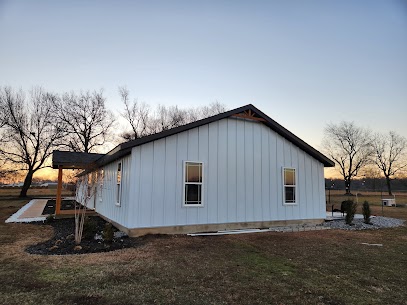
Seamless metal board and batten siding helps reduce moisture intrusion by eliminating exposed fasteners and minimizing horizontal panel seams where water commonly enters many traditional siding systems. When combined with proper flashing, weather-resistant barriers, and correct installation, the system provides an effective exterior moisture management solution. At Standing Seam Board & Batten of Oklahoma, our hidden fastener design, vertical panel profile, and non-porous steel substrate work together to create a wall assembly that actively sheds water rather than absorbing it.
Where Does Moisture Enter Traditional Siding Systems?
Most siding failures start at the same points: exposed fastener holes, panel seams, and surface cracks that develop as materials age. Rain and wind-driven moisture forces water into seams, joints, fastener penetrations, and small gaps in the siding. According to the U.S. EPA’s guide on mold and moisture, controlling moisture is the most important step in preventing mold and long-term wall damage in any home.
Wood swells and shrinks with seasonal moisture changes, widening those gaps over time. Vinyl cracks under UV exposure and impact. Each failure opens a new entry point for water behind the wall assembly. Metal board and batten siding is designed to reduce common water entry points while directing rain away from the wall when installed with proper flashing and weather-resistant barriers.
How Does the Hidden Fastener Design Stop Water at the Wall?
Every screw that penetrates the face of a panel creates a hole, and every hole is a potential path for water to travel behind the wall. Our board and batten metal siding panels use a concealed fastener system where attachment points sit behind the panel face, fully protected from direct weather exposure.
How Concealed Fasteners Block Moisture
- Fasteners sit behind the panel face, away from direct rain and wind exposure
- No rubber gaskets around screw heads that degrade and shrink over time
- Panel edges interlock to create a continuous surface with no open gaps
- Steel surface will not absorb water, swell, rot, or support mold growth
How Does the Vertical Panel Profile Contribute to Moisture Control?
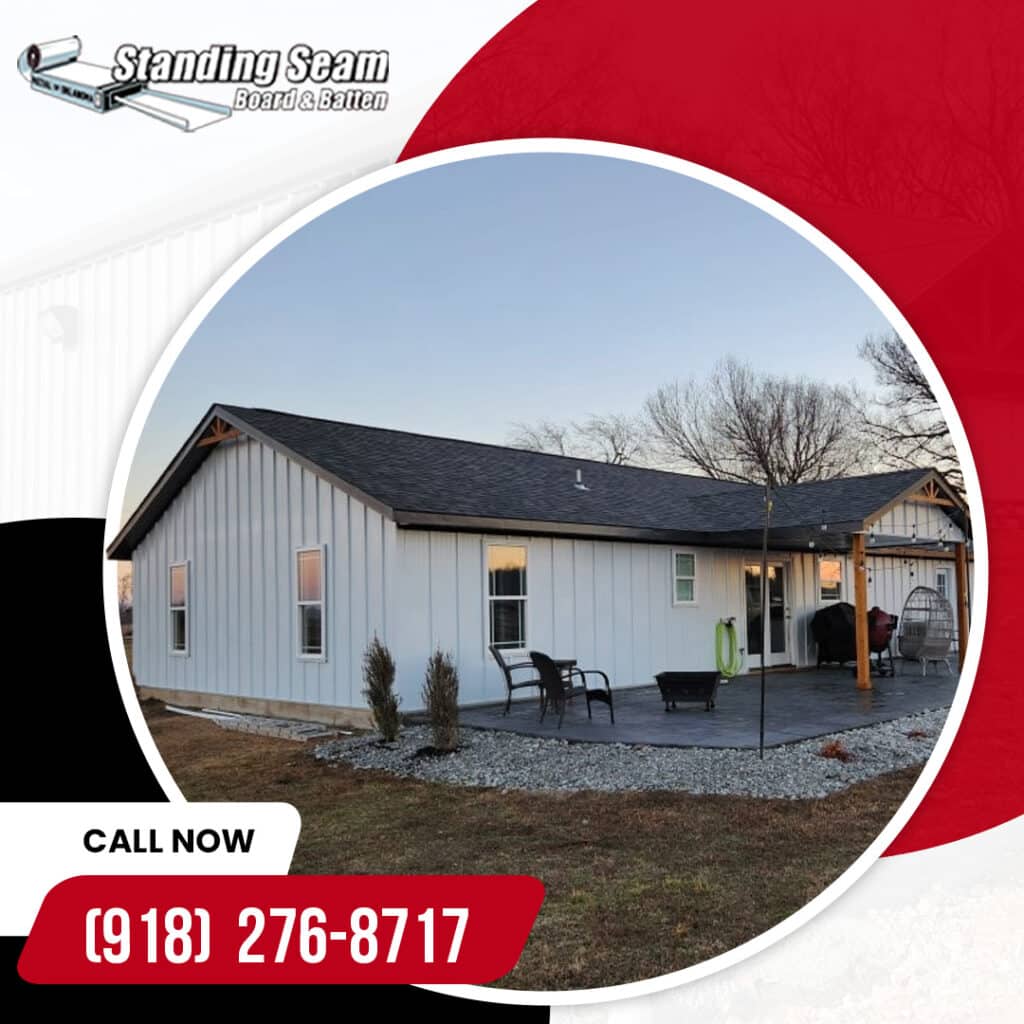
The vertical orientation of board and batten siding works with gravity rather than against it. Horizontal siding profiles create ledges where water pools before finding its way behind the panel. A vertical profile gives water a direct path to the ground, removing the conditions where standing water works into the wall assembly over time.
When properly installed with trim and flashing at windows, doors, and wall transitions, the panel system creates a tight building envelope that keeps moisture and drafts out at every vulnerable point.
How Does Steel Outperform Other Siding Materials Against Moisture?
| Siding Material | Moisture Absorption | Risk of Rot | Surface Cracking | Maintenance Required |
| Metal board and batten | None | None | None | Minimal |
| Wood | High | High | Moderate | Regular |
| Vinyl | None | None | High (UV/impact) | Moderate |
| Fiber cement | Moderate at cut edges | Low | Low | Moderate |
Our panels are built from 26-gauge steel, which exceeds the industry standard of 29-gauge. The additional thickness provides a more rigid surface that resists the denting and warping that can compromise a wall’s moisture barrier over time.
Frequently Asked Questions
Can board and batten metal siding panels be installed on an existing home?
Yes. The panel system installs over a properly prepared substrate on wood-framed structures. Correct flashing at windows, doors, and wall transitions is essential to maintaining the moisture barrier that the panel system creates.
Does the panel system hold up in heavy Oklahoma storms?
The interlocking panel edges create a continuous exterior surface with no open gaps for wind-driven rain to exploit. The vertical profile actively sheds water during heavy rainfall rather than allowing it to pool at panel edges.
What happens if a single panel gets damaged?
Individual panels can be replaced without disturbing the surrounding wall. The interlocking design means one damaged section does not require a full exterior overhaul, keeping repair costs and disruption minimal.
Where can homeowners find board and batten metal siding near them in Oklahoma?
Standing Seam Board & Batten of Oklahoma supplies board and batten metal siding across Fairland, Tulsa, Grove, Miami, Joplin, Bentonville, and the surrounding four-state area. We produce panels on-site to custom lengths, so what you receive fits your project without field modification.
Stop Moisture Before It Starts
Whether you are re-siding an existing home or building new, getting the right panels for your wall assembly matters. Standing Seam Board & Batten of Oklahoma produces board and batten metal siding panels on-site to your exact project dimensions, backed by a 40-year paint warranty. Call us at (918) 276-8717 or email [email protected] to discuss your project.