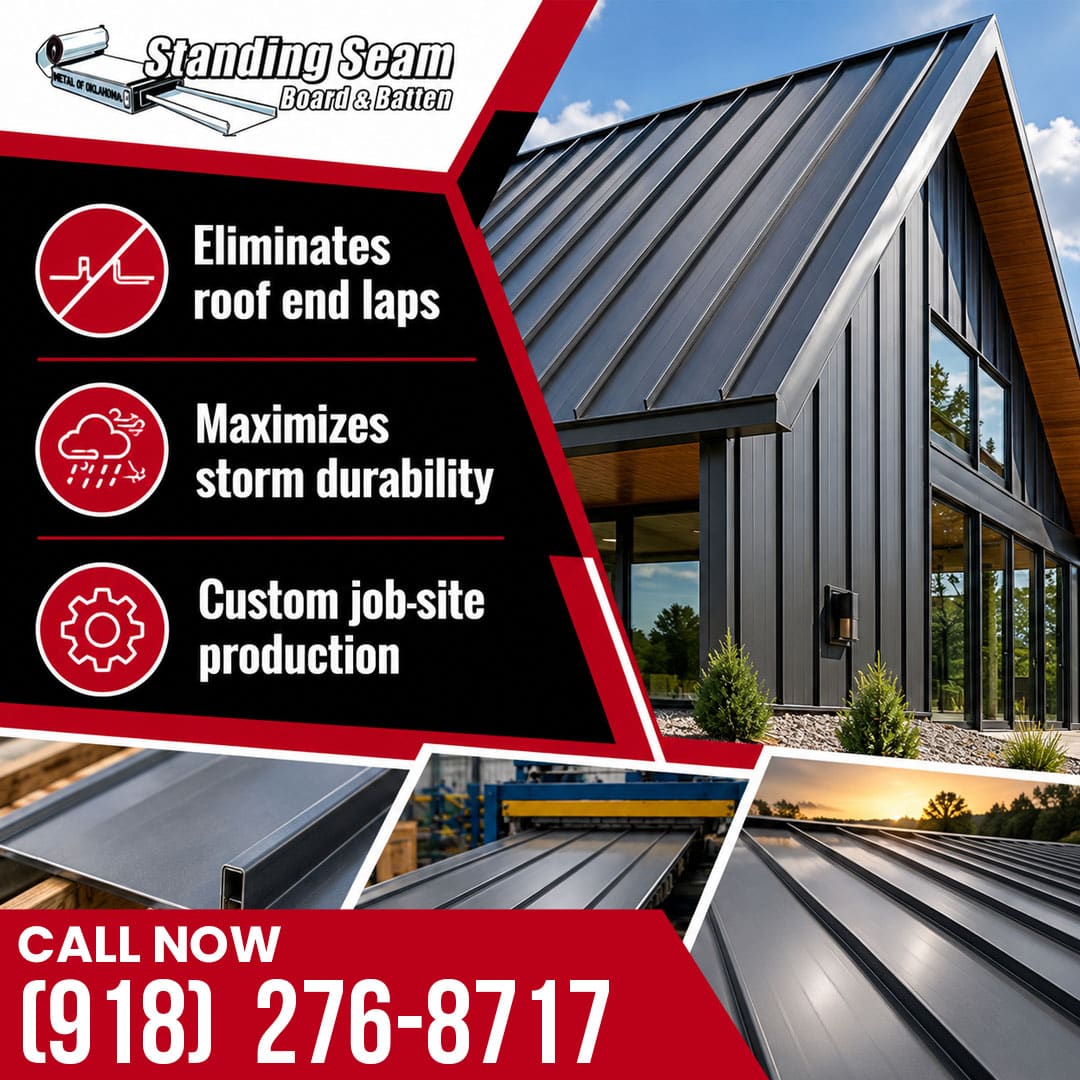
Standing seam metal roofing profiles differ in how their panel edges connect and attach to the roof. At Standing Seam Board & Batten of Oklahoma, we supply metal roofing panels and custom fabrication options. Comparing snap-lock, mechanically seamed, and nail-strip profiles helps property owners identify products to discuss with their chosen roofing installer.
What Are the Common Standing Seam Roofing Profiles?
Standing seam panels have raised seams that connect adjacent panels while concealing fasteners. The three common profile types are snap-lock, mechanically seamed, and nail-strip. Their connection methods and installation requirements vary by product. As a standing seam metal roofing supplier, we help customers review available panel options before ordering materials.
Snap-Lock Panels
Snap-lock panels have specially formed edges that fit together by snapping into place. The system commonly uses concealed clips to attach panels to the roof structure. Installation does not require a separate mechanical seaming operation, but the roof design and product specifications must suit this profile.
Mechanically Seamed Panels
Mechanically seamed panels have edges folded together using hand tools or powered seaming equipment. Single-lock systems use one fold, while double-lock systems use two folds to form the seam.
The appropriate design depends on the panel specifications, roof slope, and project requirements. The installer must follow the manufacturer’s instructions for the selected system.
Nail-Strip Panels
Nail-strip panels feature an integrated fastening flange that is secured to the roof deck. The adjoining panel covers the flange, leaving the fasteners concealed on the finished roof.
Unlike systems that use separate clips, nail-strip panels have a built-in fastening arrangement. Product specifications determine how the system accommodates movement as metal expands and contracts with temperature changes.
How Do These Roofing Profiles Compare?
The main difference is how the panels connect, rather than whether one profile suits every building.
| Profile | Connection method | Key distinction |
| Snap-lock | Interlocking edges | Panels snap together |
| Mechanical single-lock | One folded seam | One seaming fold |
| Mechanical double-lock | Two folded seam layers | Two seaming folds |
| Nail-strip | Integrated fastening flange | Flange is covered by the next panel |
These are general descriptions. Seam dimensions, attachment methods, and approved applications vary by manufacturer, so review the technical documentation for the specific product.
What Is the Difference Between Architectural and Structural Roofing?
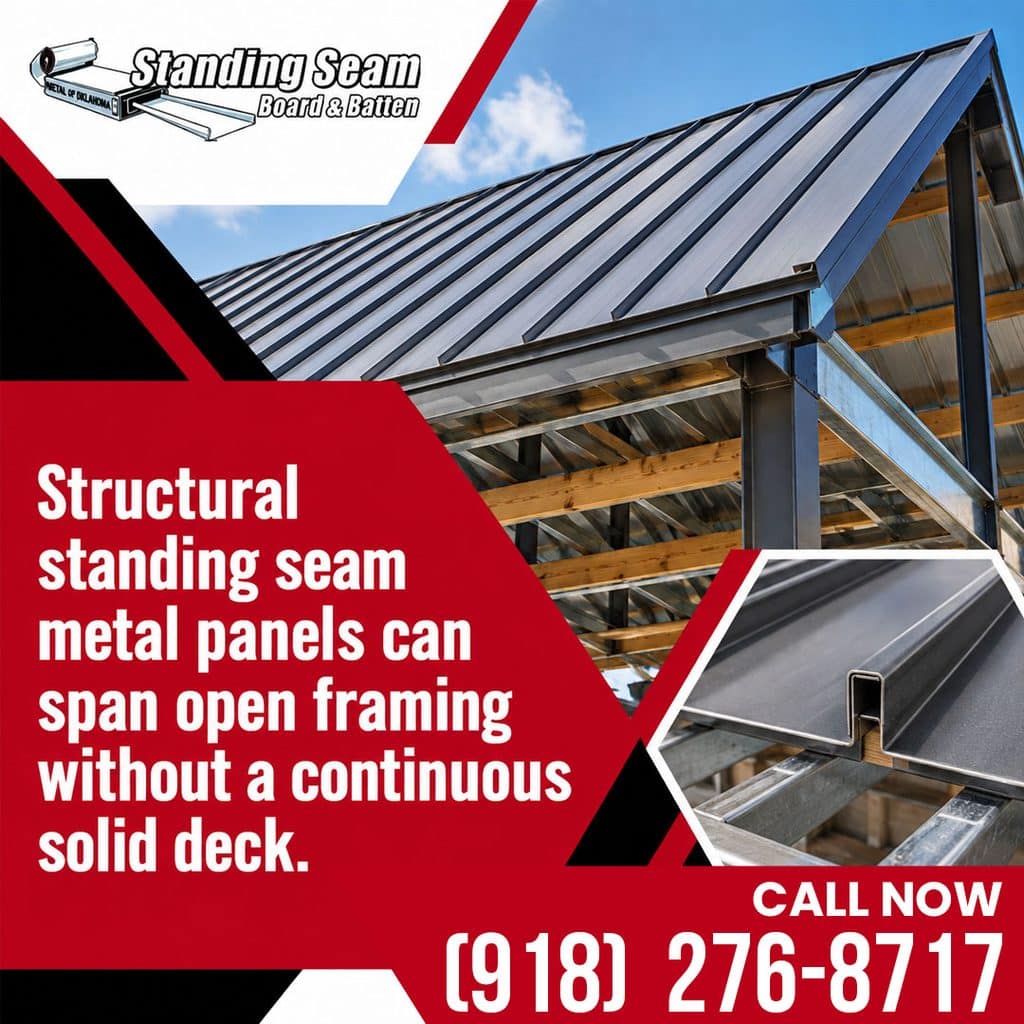
Architectural panels generally rely on a continuous roof deck for support. Structural panels are designed to span between designated supports within their rated limits.
Structural standing seam metal roofing may suit certain commercial or industrial buildings with open framing. Its suitability depends on engineering factors such as panel capacity, support spacing, and design loads. The term refers to the panel system’s structural function, not simply the height or shape of its seams.
For projects involving metal roofing in Tulsa, OK, the building design and local weather exposure should be considered when selecting roofing materials. A qualified roofing professional can review the proposed assembly and confirm whether it meets the project’s requirements.
Which Features Affect the Roof’s Appearance?
After selecting a suitable profile, consider the visual details that shape the finished roof:
- Seam height: Changes how prominent the raised lines appear.
- Panel width: Affects the spacing of vertical lines across the roof.
- Surface texture: Smooth pans create a different look from panels with striations or ribs.
- Color and finish: Help coordinate roofing with siding and trim.
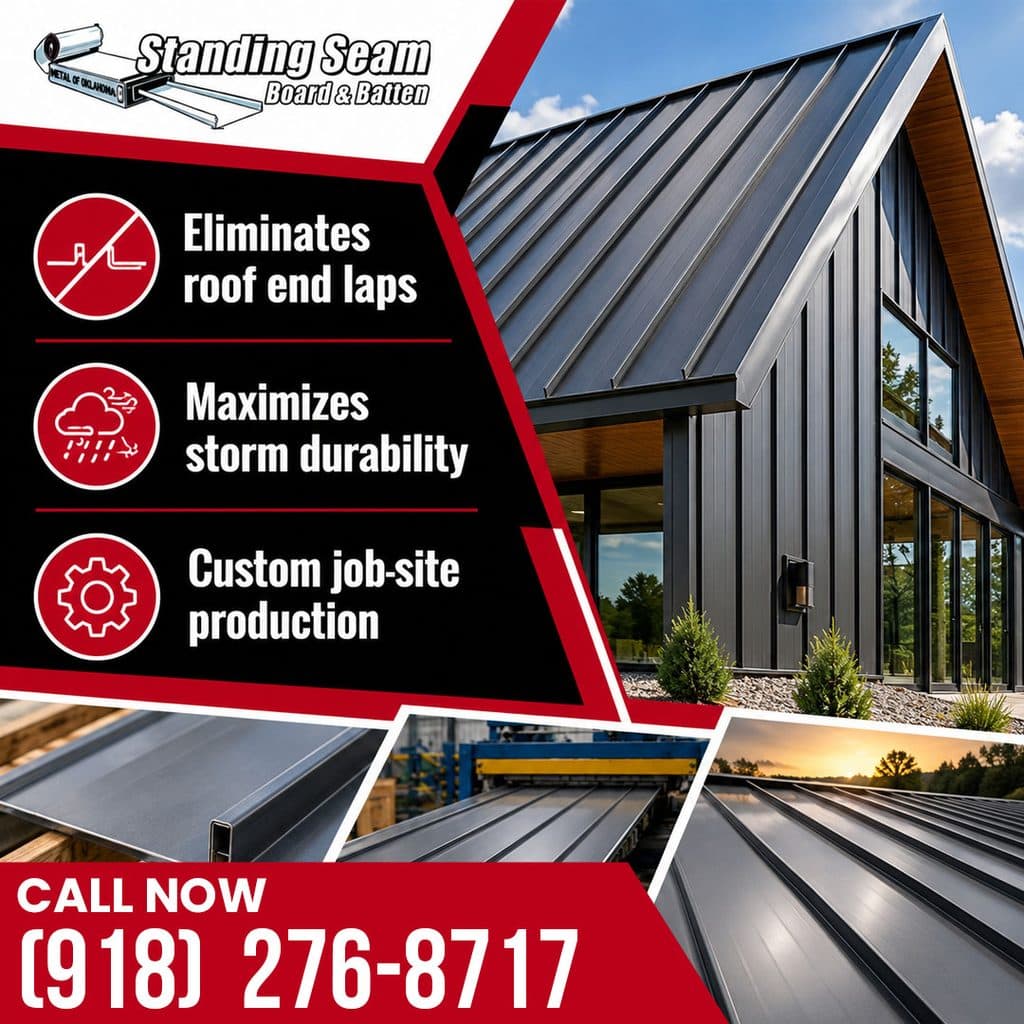
- Panel length: Custom lengths can reduce end-to-end joints when the roof layout allows.
Metal roofing selection also involves installation requirements. The U.S. Department of Energy’s guide to metal roofs discusses metal roofing materials and installation considerations.
At Standing Seam Board & Batten of Oklahoma, we offer panel fabrication and available color and gauge options for different projects. Customers researching metal roofing in Tulsa, OK, should also confirm that their selected product meets the needs of their building and roof design.
Frequently Asked Questions
Can standing seam panels be fabricated to custom lengths?
Custom fabrication may be available, depending on the product and supplier. Measurements should account for the roof layout, transport, and manufacturer limitations.
What metals are used for standing seam roofing?
Common materials include coated steel and aluminum. Some manufacturers also offer copper or zinc products.
Can the roof color coordinate with metal siding and trim?
Yes. Matching available finishes across roofing, siding, and trim can create a consistent exterior appearance. Confirm finish compatibility and color availability with the supplier.
Explore Standing Seam Roofing Options
Standing Seam Board & Batten of Oklahoma supplies standing seam metal roofing panels and custom fabrication options from its Fairland location. Call (918) 276-8717 or email [email protected] to discuss your project and request an estimate.